
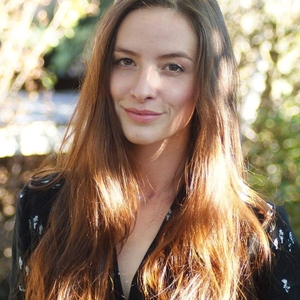
Louise Gay is a postgraduate in Medieval Studies from the University of Toulouse Jean Jaurès (France), currently preparing the beginning of her PhD next fall. Her Master’s dissertation focused on Capetian queenship and warfare, investigating the French queens’ policies of war and diplomacy from the late Xth to the early XIVth centuries. This project explored the contexts in which queens took an active role in warfare and focused on the mutations of such reginal power in connection to the establishment of the royal dynasty throughout the centuries. As a member of the Visiting Researcher scheme of the University of Winchester during her last year of MA, Louise discovered and enthusiastically joined Team Queens. Alongside fellow comrade Catherine Capel, she specialises in high-status women’s involvement in warfare and its repercussions on their lives and reputations, hoping to contribute to our understanding of gender within a military framework within the medieval period.
Continue reading “Scholar Introduction: Louise Gay”Medieval English Queens as Landowners

By Katia Wright
An important aspect of a queen’s power derived from her financial revenue. Throughout the medieval period English queens received income from numerous sources, however the largest of the queen’s revenues were drawn from her vast estates. These properties were granted to the queen by the crown to provide for her household and granted more than just income. As the owner of a large estate the queen’s financial position and political influence were interdependent and enabled the queen to gain substantial economic and political power. As such, these estates were vital for the queen to maintain her own position and status, both as the wife of the king and as the symbolic extension of the king’s royal authority.
Continue reading “Medieval English Queens as Landowners”Scholar Introduction: Holly Marsden

Holly is a first year PhD student on a Collaborative Doctoral Partnership scheme, studying the life of Queen Mary II of England. Based at both the University of Winchester and Historic Royal Palaces, Holly also works with the National Portrait Gallery and Royal Museums Greenwich. She is currently learning early modern French and Dutch as part of her studies and is very excited to be joining Team Queens this year.
Continue reading “Scholar Introduction: Holly Marsden”Book Review: The Empress Matilda: Queen Consort, Queen Mother and Lady of the English
Twice a month we’ll be recommending some of our favourite fiction and non-fiction historical works focussing on queenship, and reviewing other cornerstone works for you. This month, Cathy Capel is picking out two works which have been integral to her studies!
Continue reading “Book Review: The Empress Matilda: Queen Consort, Queen Mother and Lady of the English”Queenship and Historiography
By Louise Gay
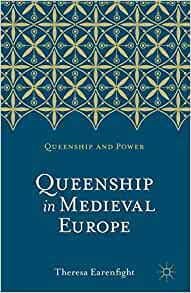
For centuries, sovereignty in the “Male Middle Ages” (as defined by Georges Duby) has been thought and written about from a male perspective. Perpetually presented as passive and submissive beings, queens were mainly considered as royal wombs rather than political actresses in the collective imagination. In consequence, the old historiography on queens focused on their roles as mothers and educators – preferably of male children in line to inherit the throne – overshadowing their active involvement in government, diplomacy, and war. Since the late 1960s, with the rise of feminist and women’s studies that aimed to place women back in history and discuss gendered roles in the past, queens have been largely reassessed as historical figures and queenship emerged as a field of study in its own right. Aspects of queenship such as maternity, piety, religious and artistic patronage, wealth, regency and many others have been thoroughly studied, and this has even allowed the publication of a few thematic syntheses. Although Western European queens have received sustained attention since the very beginning of this movement, the field of queenship studies is now expanding its horizon. Indeed, while Western scholars are starting to explore new areas, queenship as a topic of research is emerging in countries outside Europe and is investigated by their native researchers. This multiplication of case studies of women from different periods, places, and religions provides exciting new perspectives for the future.
Continue reading “Queenship and Historiography”Scholar Introduction: Catherine Capel

Catherine is a full time PhD student at the University of Winchester and is in the final year of her three-year studentship on the theme of forgotten women in history. Her main research focus is the motivations and participation of Anglo-Norman queens and noblewomen in warfare, with an interest in gendered political representations of women and the impact of kinship ties.
Continue reading “Scholar Introduction: Catherine Capel”Scholar Introduction: Katia Wright

Katia Wright is a part-time PhD Student at the University of Winchester. She has been studying medieval queenship for the last ten years, and her research interests include the troubles of fifteenth century dowager queens and the political impact of England’s French queens on Anglo-French relations during the Hundred Years’ War. Katia’s current research, for her PhD, is focused on the lands of fourteenth century English queens.
Continue reading “Scholar Introduction: Katia Wright”Scholar Introduction: Amy-Jane Humphries

Amy-Jane Humphries is a recent postgraduate alumna from the University of Winchester. Her Masters dissertation explored the queenship of Margaret of Anjou and Henrietta Maria with a particular focus on how they operated as queens during the Wars of the Roses and the Wars of the Three Kingdoms. The range of her main research interests is largely encapsulated by this dissertation, but she has since begun to explore the queenship of the early-Hanoverian queens, Caroline of Ansbach and Charlotte of Mecklenberg-Strelitz, and the role of their respective daughter- and mother-in-law, Augusta, Princess of Wales. Amy is particularly interested in historical narratives that are obscured from view, especially in the public sphere, and is always striving to make sure these stories are told. She is therefore interested in both global queenship and local history, because sometimes the stories closest to us are the ones we lose sight of first.
Continue reading “Scholar Introduction: Amy-Jane Humphries”Scholar Introduction: Johanna Strong

Johanna is a second-year PhD student at the University of Winchester under the supervision of Dr Ellie Woodacre and Dr Simon Sandall. She completed her Bachelor of Arts (Honours) at Queen’s University, Canada, and went on to complete her Master of Arts at the same university. Her Master’s thesis analysed early modern interpretations of queenship, especially through the works of John Knox (The First Blast of the Trumpet against the Monstrous Regiment of Women) and Henry Howard (‘A Dutiful Defence of the Lawful Regiment of Women’). She spent the first year of her Bachelor’s at the Bader International Study Centre at Herstmonceux Castle in East Sussex and is thrilled to be back in England for her PhD.
Continue reading “Scholar Introduction: Johanna Strong”Going Global—New Directions for Queenship Studies
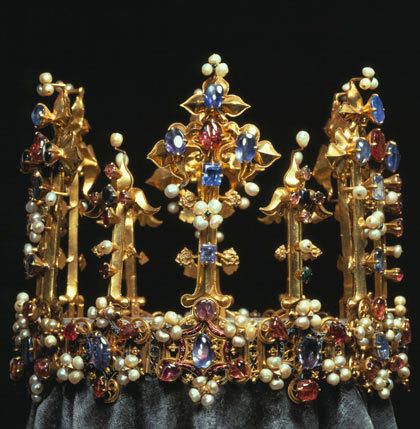
Queenship studies is a thriving academic discipline and wider interest in queenship is also reflected in a plethora of books on queens in the mainstream press as well as movies, tv series and novels about queens in popular culture. Biographical studies of the lives on individual queens or collective biographies of groups of queens have long been a mainstay of the field. Indeed, as I’ve argued elsewhere, these biographies which stem back to the middle ages, are arguably the point of origin for queenship studies itself and are still vital to the field today, as Routledge’s Lives of Royal Women series demonstrates. Many themes have been explored by queenship specialists–the political activity and agency of queens, their religious and cultural patronage, their familial and court networks, and the ways in which queens ‘self-fashioned’ their image are just a few examples of areas which have attracted considerable interest from scholars. In terms of period and place however, the focus has long been on medieval and early modern Europe—this has been the ‘comfort zone’ for both queenship and royal studies. While this has resulted in some fantastic scholarship on European queens and there are still individual women as well as areas of Europe which are understudied, a new trend is emerging to look at queenship globally, across all time, place, cultures and religions.
Continue reading “Going Global—New Directions for Queenship Studies” Team Queens