Having completed her undergraduate and master’s degrees at the University of Oxford, Victoria is currently pursuing a PhD in Spanish at University College London (UCL), funded by the Arts and Humanities Research Council UK. In addition to her AHRC studentship, Victoria is an ARTES-CEEH scholar and has been awarded the Everett W. Hesse prize by the Association of Hispanic Classical Theater.
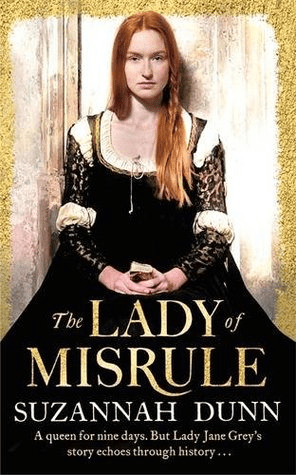
“A good Catholic girl was what they’d said they needed” (page 5). So begins Suzannah Dunn’s The Lady of Misrule, a novel of Lady Jane Grey’s last days in the Tower of London before her execution in February 1554. As seen through the eyes of the “catch-all Catholic girl” (5) Elizabeth Tilney, the woman who had “come to supervise [Jane] in her detention” (11), Dunn’s work simultaneously approaches the question of confessional divide in mid-Tudor England and provides a more human view of the imprisonment and execution of England’s ‘Nine Day Queen’. Dunn also implicitly engages with historians’ largest quandary: source bias. While the plot is dominated more by interpersonal relationships between the characters than by any twists and turns of actions and events, Dunn’s novel is nevertheless engaging and provides a unique viewpoint to mid-Tudor England.
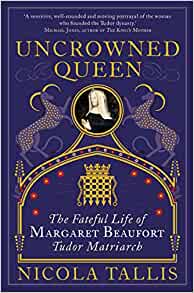
The image of Lady Margaret Beaufort, mother of King Henry VII, the first Tudor king of England, is often one of a somewhat dominant, stubborn, and determined royal mother who sought to ensure her son gained the throne and stayed there. Tallis’ biographical study of Margaret offers a compelling insight into this royal matriarch, uncovering her life outside of queenly motherhood and her epitome of ‘Uncrowned Queen’ makes her an interesting study for one who was not formally queen, but arguably held the power of one.
Willem Wissing, Mary of Modena, Buccleuch Collection, Drumlanrig Castle.
One early modern queen consort has not yet received her share of the limelight, despite a dramatic and remarkable life. Mary of Modena (1658-1718), born Maria Beatrice Eleonora Anna Margherita Isabella d’Este, married James, duke of York (1633-1701) in 1673. She was only fifteen, and the duke was forty. While such age gaps sometimes occurred in noble marriages, they were unusual amongst the Stuarts. Of the most recent royal pairs, Charles I was nine years older than his wife, Henrietta Maria, and Charles II was eight years older than his consort, Catherine of Braganza. Mary’s new husband at least shared her Catholic faith, although this faith was reviled by many in England. In the early 1670s, Charles II’s failure to produce an heir meant it looked increasingly likely that his brother James would one day be king. The English Parliament therefore tried to stop Mary and James’ marriage from going ahead because of their fear of a male Catholic heir who would supplant James’ Protestant daughters with his first wife, according to England’s tradition of male primogeniture.
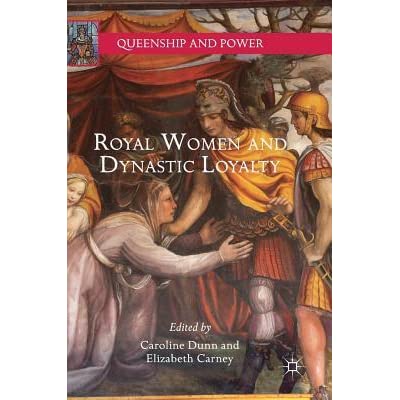
The growth in scholarly works on royal women has continued apace for the last four decades, with a particular speed owed undoubtedly in part to the machinations of the Kings and Queens conference series, organised by the Royal Studies Network, and the book series Queenship & Power, with this volume being a perfect example of how the two intertwine. It is a must-read for those looking for a series of case studies on royal women and their dynasties.
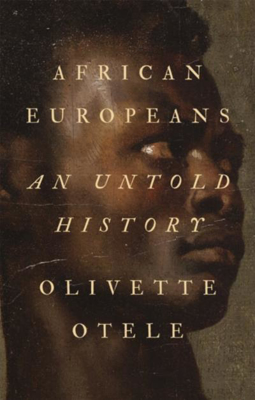
With African Europeans, Olivette Otele, Professor of the History of Slavery and Memory of Enslavement at the University of Bristol, deftly weaves from past to present to tell the untold stories of the people of Africa and Europe. By restoring these stories to their rightful place in the histories of these continents, Otele provides a more complete picture of our past. It is a reminder that Africa and Europe, and their peoples, have been intwined for millennia. However, this book is much more than a work of history—it is also a manifesto for our times. The book challenges many of the ideas that surround questions of identity, heritage, and the historical presence of people of African descent in Europe. Otele uses the past to illuminate the path to a better future and demonstrates that it is only by understanding our past that we can help to build a world that is truly equal and breaks the “destructive patterns of violence and subjugation” (p.219) that have, and regrettably continue to, ruin too many lives. African Europeans is a work that seeks to resolve the problem that those who do not remember the past are doomed to repeat it; it is history-writing at its finest.
In my last blog post for Team Queens “Going Global: New Directions in Queenship Studies”, I talked about how important it was for us as a field to reframe queenship in a fully global context, inclusive of all periods, places and cultures. While this is a fairly new trajectory for queenship as a field, it is important to acknowledge that there is already some fantastic scholarship on royal women, from ancient Mesopotamia to the ongoing modern controversies on female succession in Japan.
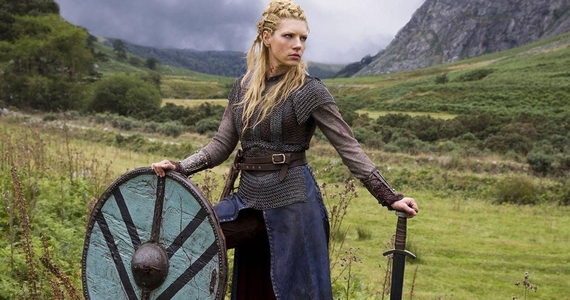
Queens have been brought to life on the screen for many decades, highlighting their turbulent and enigmatic reigns and portraying key themes analysed within queenship studies – reception of female power and rulership, succession crises, sexuality, and motherhood to name but a few. But warfare as an aspect of queenship has not been a focal point for representing these queens. Although there are references to the conflicts which occurred during their reigns, it is not a theme that forms their identity as a ruler. The depiction of queens participating in warfare in films and television series, however, is gaining ground in tandem with royal women gaining more recognition in military historiography.
A member of the French Academy, a veteran, and a resistance fighter against Nazi Germany, Maurice Druon (1918-2009) was one of the co-authors of the mythical Chant des partisans – the anthem of French Resistance. But among his many nationally acclaimed works, the Accursed Kings series of historical novels (Les Rois Maudits) crossed borders to become an international success. This seven-volume story is the result of a collaborative team effort, and the names of his many collaborators can be found in each preface. The first six books were published between 1955 and 1960, with a final seventh – more independent from the others – released in 1977.
If, according to the contemporary view, the reign of Marie-Louise d’Orléans, wife of King Carlos II of Habsburg, ended with the fleeting victory of the Austrian faction at the court of Spain, her sudden death, which gave rise to tenacious suspicions of poisoning, has something to feed the romantic imagination.





 Team Queens
